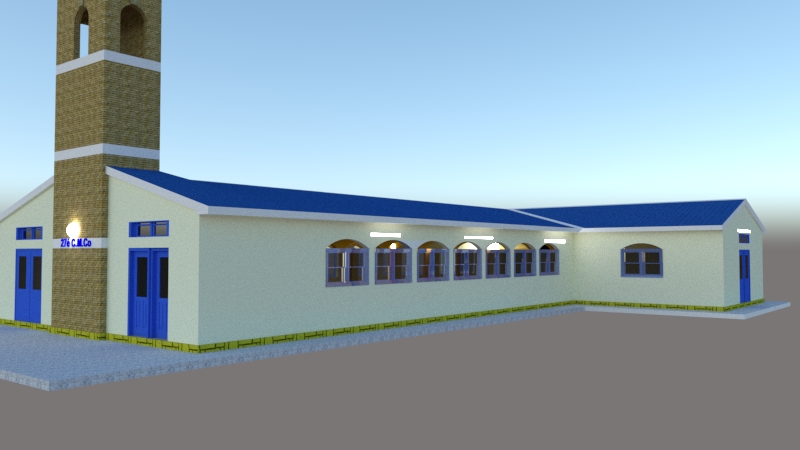
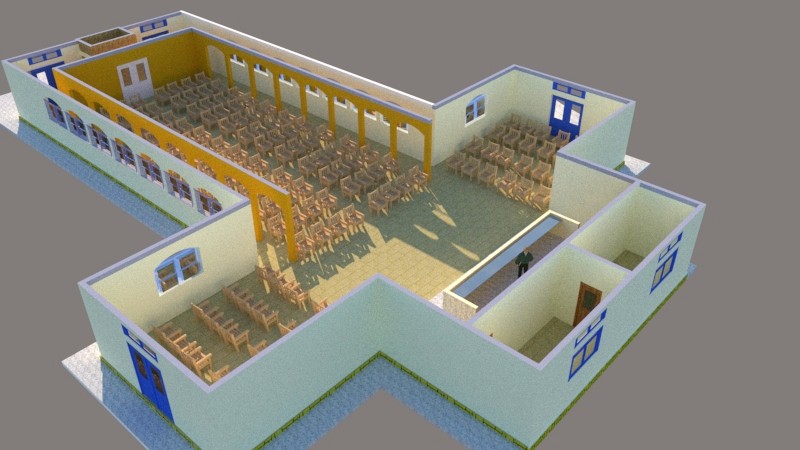
A Church for Today, A Memorial for Tomorrow

We invite you to continue reading the story behind our Church building project—and learn how you can help provide a place of worship for today while leaving a legacy of faith for the next generation.

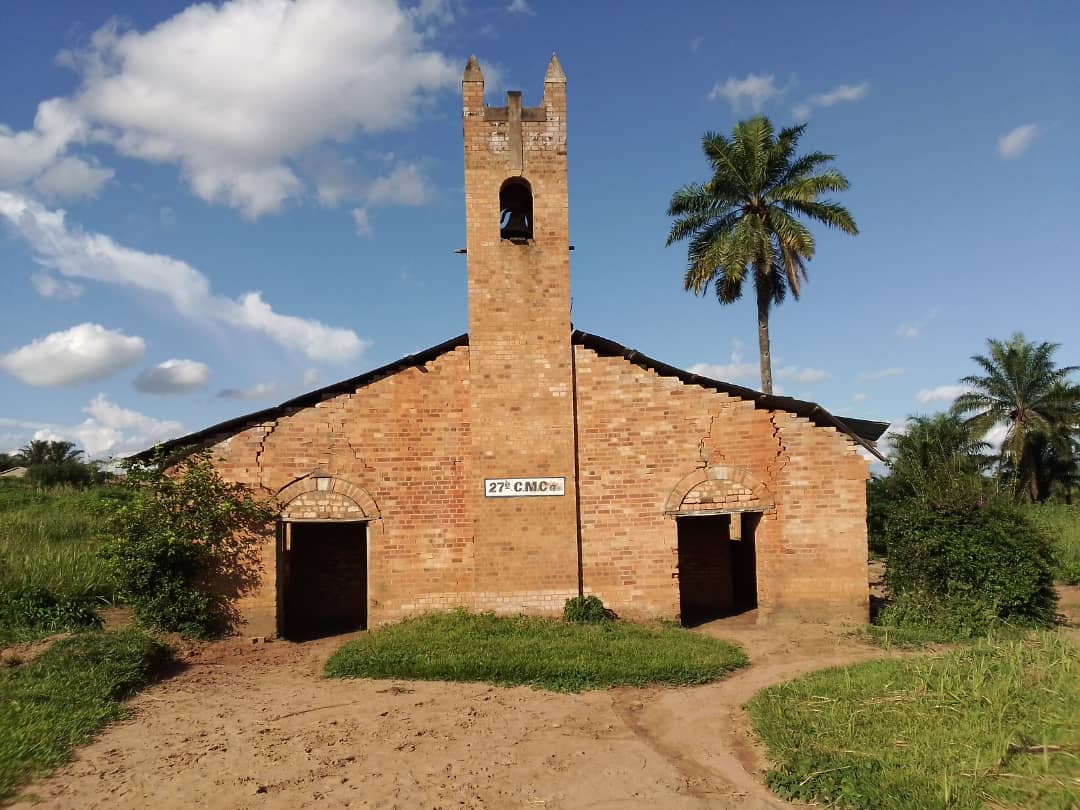
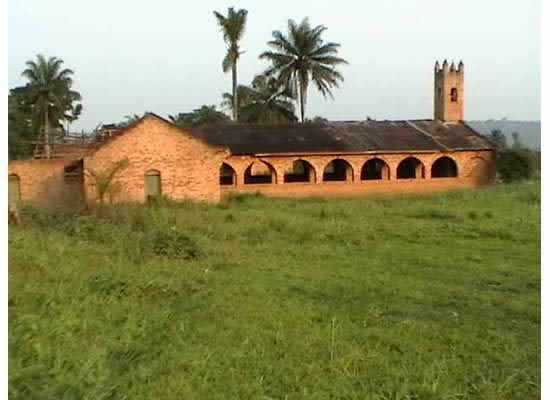
For more than 114 years, Ndjoko Punda, formerly known as Charlesville, has been a place where God has faithfully worked through generations of believers. Today, the historic church building is no longer safe.  The walls are cracking and crumbling.  The front wall of the church behind the choir loft is half gone with no roof over the choir loft. The main roof has been repaired and propped up several times in recent years following severe wind storms. 

There are places where history is more than something written in a book. It is carried in the stories of the people, remembered in the lives of those who came before us, and passed from one generation to the next.  Ndjoko Punda is one of those places where the Gospel and God’s faithfulness continues to impact lives and bring transformation. A place where our parents served and we as siblings have our early childhood memories.

In 1912, the Congo Inland Mission—now known as Africa Inter-Mennonite Mission—established its first mission station at Ndjoko Punda. For more than a century, the story of God’s work in this community has been told and retold. The mission station, the church, and the people who have worshiped there are part of a living legacy.

Three years later, in 1915, the first two converts were baptized.  Pastor Luaba Isaac, one of the first two people baptized at Ndjoko Punda, became the first pastor of the church.  Under the leadership of Pastor Luaba Isaac and another pastor, Negalula Joseph, God blessed the church and caused it to grow, even amid great difficulties.

Kafuna Josue, known as a “bush soul winner”, was a young man working as a houseboy for the captain of a riverboat traveling between Leopoldville (Kinshasa) and Port Franqui (Ilebo). From Port Franqui, products would continue down the river to Ndjoko Punda, the last river port before a major waterfall.  Little could he have known how God would use his life. Kafuna became the first outstation evangelist for the Congo Inland Mission (C.I.M.).

A soft-spoken man, Kafuna never became known as an outstanding leader by the world’s standards. Yet God had called him to serve in remote, out-of-the-way places—in the “bush,” where many others were unwilling to go. He was a personal evangelist, faithfully sharing his faith with individuals, one person at a time. Only heaven will reveal the full fruit of his labors.

One of the men Kafuna led to Christ was Kazadi Matthew. In time, Kafuna’s influence helped lead Matthew to dedicate his life to the ministry, who in future years became a primary leader of the church and guided the church through the tumultuous years of the 1960s. Through the faithful witness of this quiet servant, God was preparing leaders who would help establish and strengthen the growing church.

As the Congo Missionary Messenger reminds us, the story of the early church in Congo is not simply one of growth, but of faithful servants who answered God’s call. Their legacy lives on in the churches they helped establish and the lives they touched.

Evangelism is part of their DNA.  By 1948 Ndjoko Punda was the largest of seven mission stations.  The church and the surrounding area had grown to 5,238 members with 648 people under instruction for baptism. Outreach extended to 152 communities receiving regular Bible teaching from 152 evangelists.   (Congo Missionary Messenger)

God used these “living stones” in building the Church at Ndjoko Punda.  They could not see the children who would grow up hearing the Gospel.  They could not see the pastors and teachers who would later serve the church.  They could not see the generations of believers who would worship Christ in that place and yet they remained faithful as “living stones”.

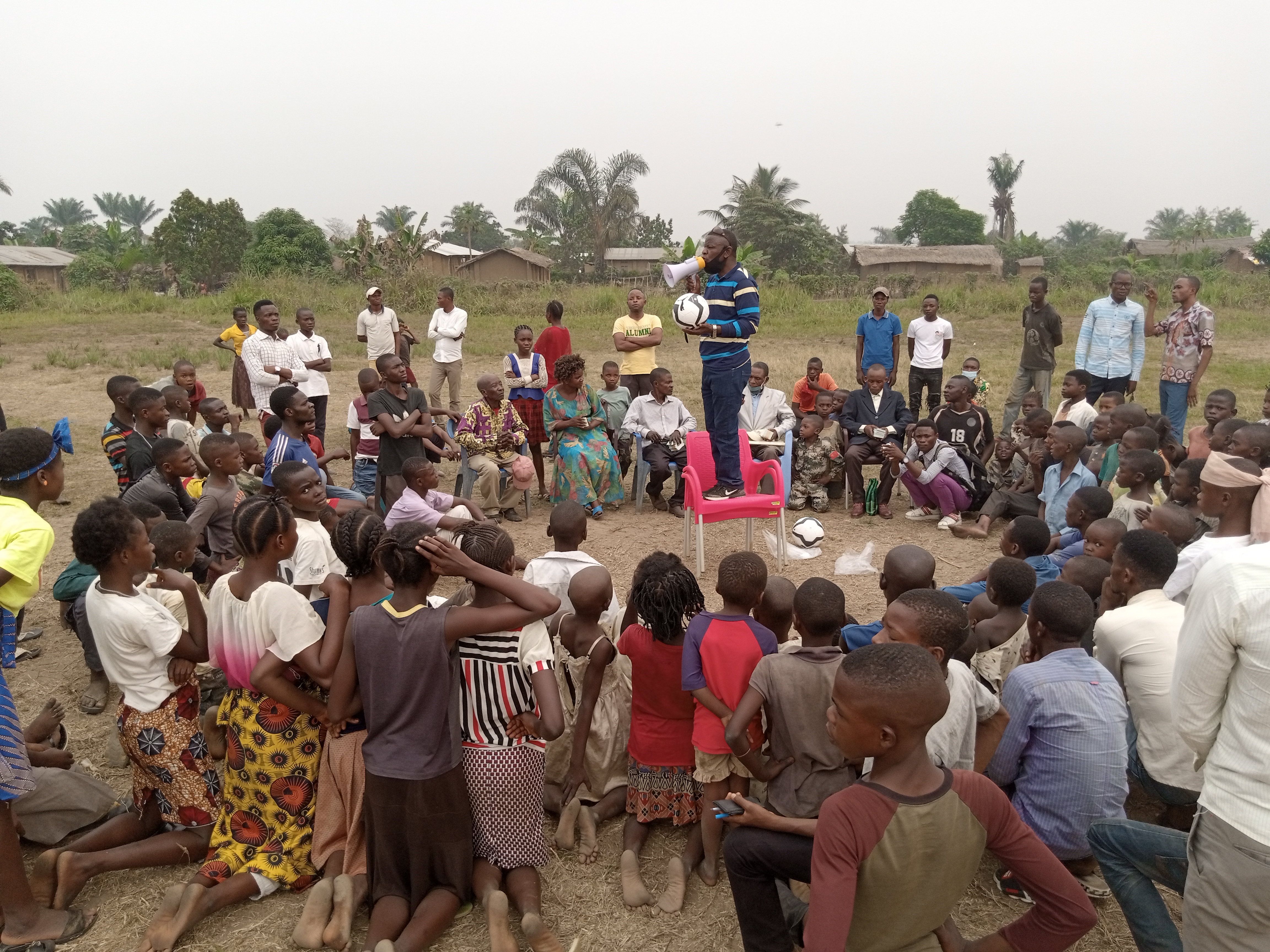
Today the Church is strong and dynamic; however, life in the community is difficult.  A typical Sunday has 800 in attendance with many participating in the life of the Church.  Evangelism continues to be a strong focus particularly among the youth.  Half the population in Congo are youth.  It may be in the form of youth soccer evangelism or moving out beyond the community on evangelistic missions either on foot or traveling up the Kasai River in a dugout canoe to places as far away as 5- 8 days.
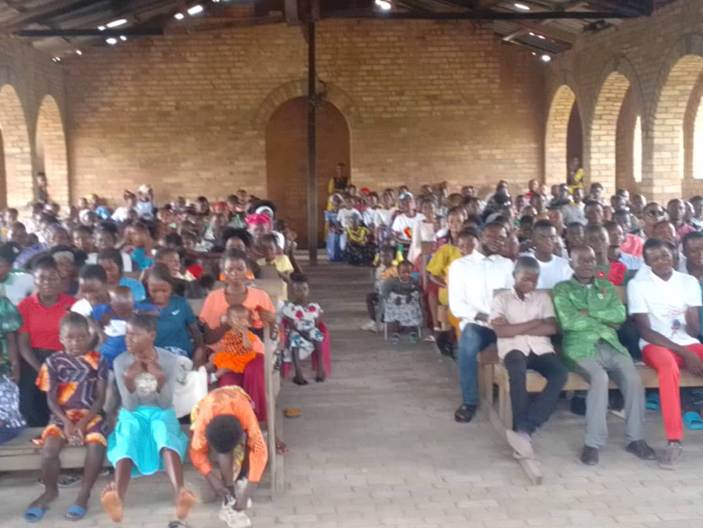
Ndjoko Punda Congregation
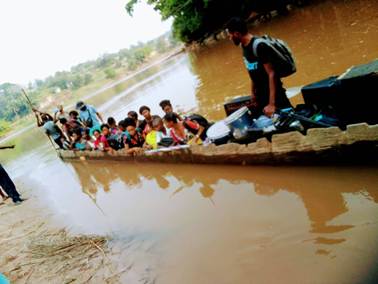
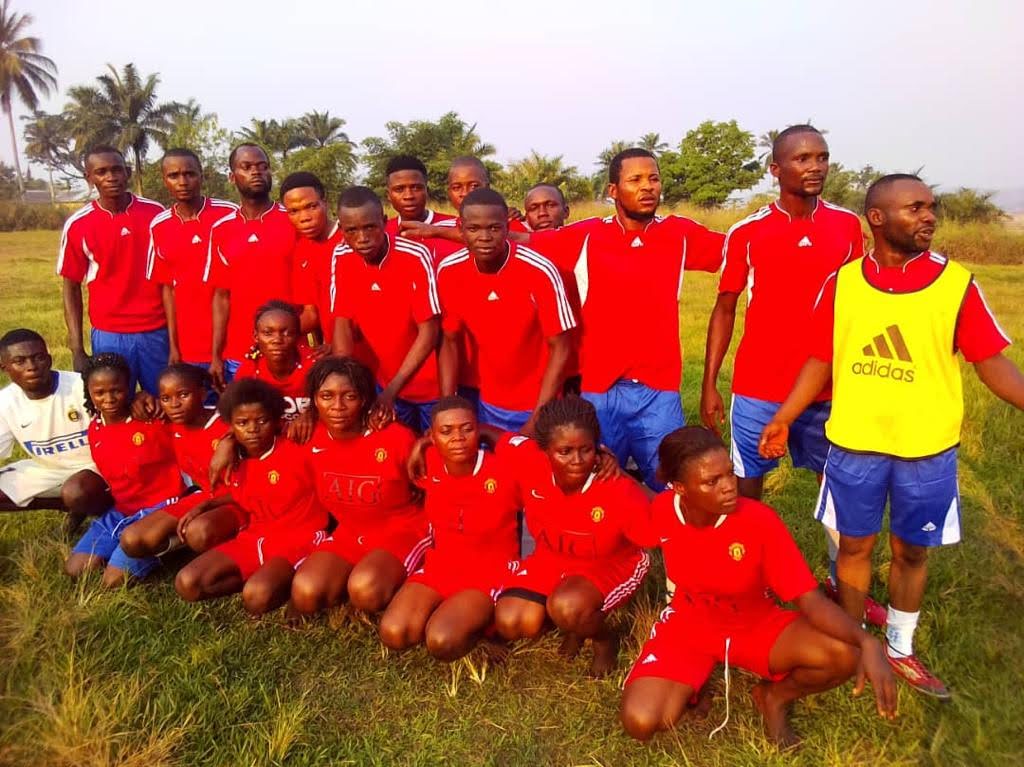
Youth Evangelism Mission
Youth Soccer Evangelism

The writer of Hebrews reminds us:  “We are surrounded by a huge crowd of witnesses to the life of faith… Let us run with endurance the race God has set before us.”
— Hebrews 12:1

Those who came before us ran their race.  They built churches.  They taught God’s Word.  They planted seeds.  They endured hardship.  They trusted God.  Now it is our turn.

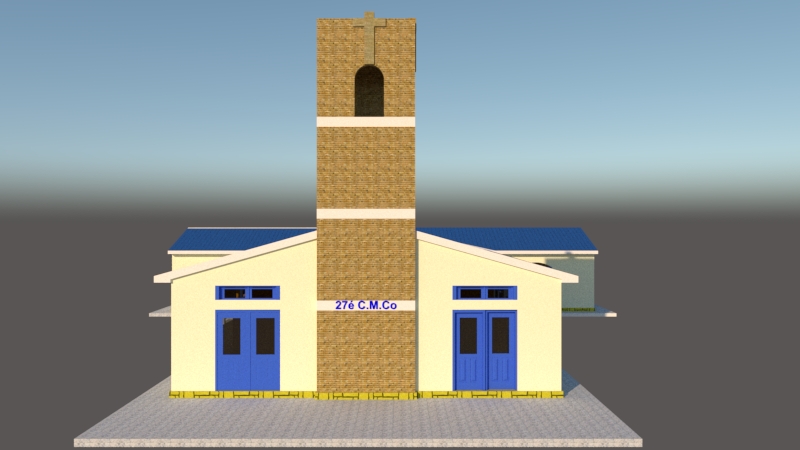
This is more than a building project.  It is an investment in a place of worship today and a legacy for tomorrow.  $87,500 is our goal.  $67,500 remains to be raised.

Donations can be made to:

Africa Inter-Mennonite Mission
        P.O. Box 744
          Goshen, IN 46527-0744
          USA

Or through PayPal using the link: https://www.aimmint.org/donate1.html

Designate your donation –  NP Church

Going to Church in Congo

Adam Graber wrote the following about Going to church in the Congo:

Leonard arranged for us a taxi to take us to his church. Leonard is an old man here in Congo, although I doubt he is more than 60. The median age in Congo is 16. Children flocked like sheep wherever we went. So here, a man like Leonard, has lived a long, hard life. He saw Congo when it was still under the Belgian hand. He remembers the days before revolt and civil war. He is among the few who remembers a Congo that was not so forlorn.

Despite witnessing the decades of decline and decay, Leonard has the smile of a comfortable couch, looks upon you with a long gaze and sparkling dark eyes, and holds your hand long after you’re done shaking his. Like other elder men I met in Congo, Leonard carried in his arms a tattered, hardcover notebook as though it were a small child. Inside it, he made notes, kept appointments, and wrote addresses that he would review later.

We bounced down a dirt street lined with painted, cinderblock walls. Doorways broke up their contiguity. In front of the walls, ran concrete gutters. The taxi dropped us off in front of a wall that read “Centre Evangelique Nebo.” I crossed the trash-dammed gutter on a bridge made from a car door. Through the opening in the wall, we found ourselves at the corner of the church sanctuary. The far wall, along the right side of the room, was also cinder block. It was the only complete wall. Along the left side hung something like large bed sheets. They were mismatched. One was colorful red, yellow, and blue. On it, was a print pattern with the words “Qui est Jesus?” and “Who is Jesus?” along with other phrases and languages. The words faced the dirt alley that ran between the church and the house next door. I imagined this was a sort of evangelism.


Inside, there were wood benches mostly, but we were sat in the second and third rows, in mismatched plastic, patio chairs. The pastor and other church leaders greeted us with handshakes. As they shook our hands they touched their forearms with their opposite hands, a gesture of respect. I took my seat in a baby blue armchair. The floor was dirt. I studied the ants climbing up and down the wall near a beam supporting the tin roof overhead. The sunlight slipped between the top of the wall and the roof.

I thought about the sanctuary of my church back home. It is a new building, and I had heard it once described as a “fully controlled sound and light environment.” Here, muffler-less cars grumbled past in the street behind us. Drums and cymbals carried across the street from what I presumed to be another church. The bed sheets looked like sails as the air pressure vacillated in and out of this space.

We were a little early—on time by U.S. standards. The singers were just arriving. A few women sat across the aisle with the children. There were maybe 10 adults in this sanctuary when we arrived. One pastor stood in the pulpit. He rested his elbows on the high pulput, almost at shoulder height for the man. He placed his hands on his head, half covering his face. His face was expressionless which I mistook for exhaustion.

A young man, about 20, milled about behind a keyboard situated on the concrete stage at the front of the sanctuary. Then, his voice rang out low and clear with a descending melody: “A Yahweh, A Yahweh Kumumba.” Like bagpipes begun with a drone, then followed by a flood of sound, the rest of the congregation—the 10 adults there—joined in. The young man strolled over to a standing wooden drum, and he began a rhythm. The rest was a capella. Their volume rivaled the sound system at my church.

Much of the music was a call and response. The congregation sang a chorus while one leader or another would sing out a solo over it.

I joined in with this chorus, clueless as to what I was singing. I struggled as I sang, though, to bend my spirit into a posture of worship. I needed to engage with it meaningfully before it could become real worship. I needed to understand what I was saying before my heart, or my head, or my mouth­­—something—could affirm it all. Yet, how often I sing words I know and still hardly mean. I sing those words because I know how to say them. But that “something” inside me doesn’t make the connection with them before they slip past my lips. I am not worshipping then any more than I am mimicking this African language. With all the tongues of men and of angels, I am but a clanging cymbal.

I glanced down the row to Leonard, sitting next to my dad. He was flipping pages through his notebook, studying old notes and scribbling new ones. As the worship wore on, more people trickled in, including many teens and some young adults sitting in the back, until there were 40-50 people in the sanctuary. A man in his 40s slipped into the row in front of us with his Bible and a notebook of his own. His tie was humorously short, falling to the middle of his chest.

The format was quite similar to a church service in the U.S.: worship, announcements, prayer, preaching, worship. Everything was in the local language of Lingala or in French, so I followed very little. The pastor had been standing in the pulpit with his hands covering his face this whole time. He said a few things and then paused, and I heard the chatter of many voices behind me. I bowed my head. It sounded like the voices of the entire congregation, praying aloud. From behind me, my uncle, who knows a bit more of the language than I, grabbed my shoulder and whispered, “I think they’re praying for us.” I was glad that God was not limited by language like I was. I listened to the chatter until it died out, the last voice took a few moments to finish. Then silence.

The man with the short tie stood up and took the pulpit. His chosen texts for the day were Numbers 27:1-9, John 9:1-3, and Hebrews 4:16. They were read from a Bible translated in the local language. I listened but did not understand. I read the passages from my English Bible and tried to grasp their connection.

I wonder how the spread of the Gospel would have been different were it not for the Tower of Babel. Latin would not have been the language of high liturgy, meaningless for the commoner. The arguments about translation would have had a whole different face. Even with one language, it may have evolved over time like Old, Middle, and modern English. Yet the Bible has been inherently translatable from nearly the beginning. Even most of the words of Jesus were not recorded in the language he spoke. It was written in Greek, but he spoke Aramaic. Already in the recording of those red letters, his words were translated, and interpreted de facto.

When the service ended, the chairs and benches were stacked. The sparse musical equipment was packed and hauled away. I was talking with a young man about my age, Jeremie, when I was handed a bottle of Coke. And as I held it, my server popped the lid off. We, each of us guests, were treated to this luxury, and I felt guilty being treated with a Congo pleasure that is not so rare in the U.S.