African Medical Alliance Trip

Whenever possible, we here at Hope 4 Congo, like to support other ministries in the Congo by posting information about them here on our site. With that in mind the following post for the African Medical Alliance is from our contact Ron Brown. He and his colleagues are in Congo right now.
2b1b9204-5d51-476d-a1fe-d8590603bb2f
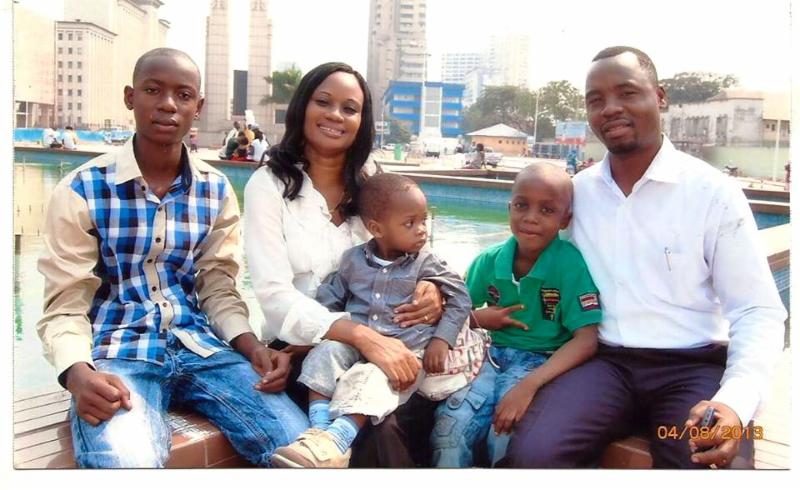
Dr. Narcisse Naia Embeke and Family

African Medical Alliance February 2015 Newsletter
Meet our AMA Colleagues

Dr. Narcisse Naia Embeke, a physician with more than ten years of experience in primary care, is the Child Health Senior Technical Advisor for the Integrated Health Project in the Democratic Republic of Congo (DRC-IHP).

He has worked alongside the Congolese Ministry of Health to support and scale up child survival programs. He was a key player in the reintroduction of vaccines to the health zone of Tandala. Based in Kinshasa, Dr. Embeke previously served as the health advisor for Management Sciences for Health’s Leadership, Management, and Sustainability (LMS) project. Prior to his work with MSH, Dr. Embeke was the medical coordinator for the Church of Christ in Congo (l’Eglise du Christ au Congo/ECC) and the primary care physician for the public health non-profit ACS/AMO Congo caring for orphans and vulnerable children. Dr. Narcisse plays an important role in arranging networking opportunities for AMA President, Dr. David Strycker, in the capital city of Kinshasa, DRC.

Rod Brown is retired from a career in business with experience in project management, business development and marketing with a particular focus on strategic alliances. Rod is a certified volunteer chaplain in a medium security facility in Kentucky and has served in prison ministry in the United States, Nicaragua and Africa for the past 18 years. Rod’s parents were missionaries in the Kasai Province of the Democratic Republic of the Congo (DRC) and he lived there in the early 1960’s, shortly after independence. Rod served on the mission field in Nicaragua with Nicaraguan Prison Ministry, Inc (NPMI), an organization he helped initiate in 2001. He also served in Kenya and the DRC with Wycliffe Associates. Rod is a founding member of Parkway Baptist Church in Bardstown, KY where he teaches and is active in missions and other ministries.
507ff929-9027-46e4-83a2-b3d2a2074ec3
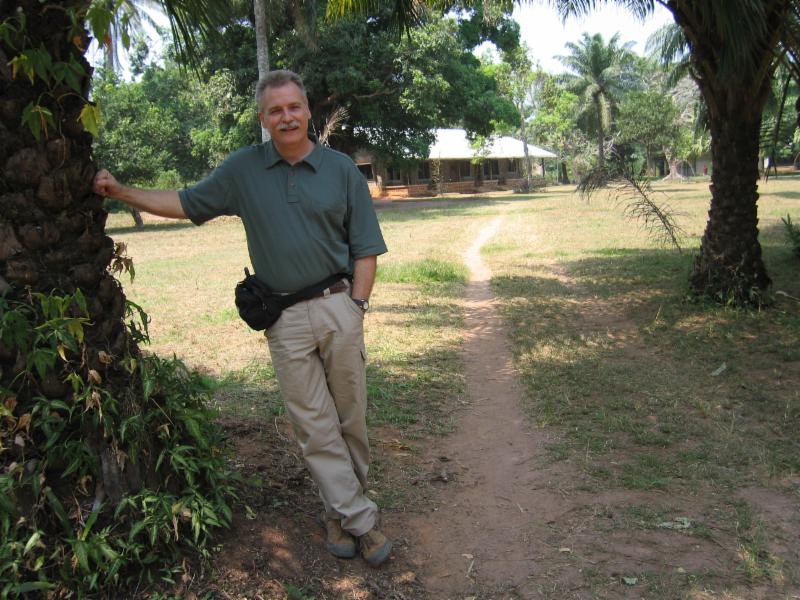
Dave Oothoudt in front of Tandala Guest House

Dave Oothoudt lives on the Oothoudt family farmstead in southern Minnesota where
he is self-employed as a cabinet maker. He has a long history as a lay leader in his local church, and can often be found creatively teaching others about his faith in Christ. Dave traveled to the Democratic Republic of Congo (DRC) for the first time in 2008 with a small group of health professionals from his church. Drawing from both of his backgrounds as a licensed psychologist and as a church lay leader, Dave accepted the invitation of the local Congolese church to present seminars to Bible Institute students and their spouses. In 2010 and 2013, Dave was again invited to teach, focusing on training trauma counseling to pastors following a devastating, deadly uprising in the region of Sud-Ubangi, DRC. His seminars in training counseling methodology to pastors, students, and lay leaders have become very well attended in recent years, including in the capital city of Kinshasa, under the auspices of ReachAfrica.
These colleagues along with Dr. David Strycker will be working in DRC March 17 – April 18, 2015. Meetings are scheduled in Kinshasa with:
World Health Organization
UNICEF
Inter-church Medical Agency
DRC Ministry of Health
Biamba Mutombo Hospital
Protestant University Medical School
University of Kinshasa Medical School
Counseling training seminar
Equateur Province, DRC
Assessments of Tandala and Karawa Hospitals
Meetings with church leaders in the regional city of Gemena

For more information please go to their website. http://africanmedicalalliance.com/
The Mission Station Changes

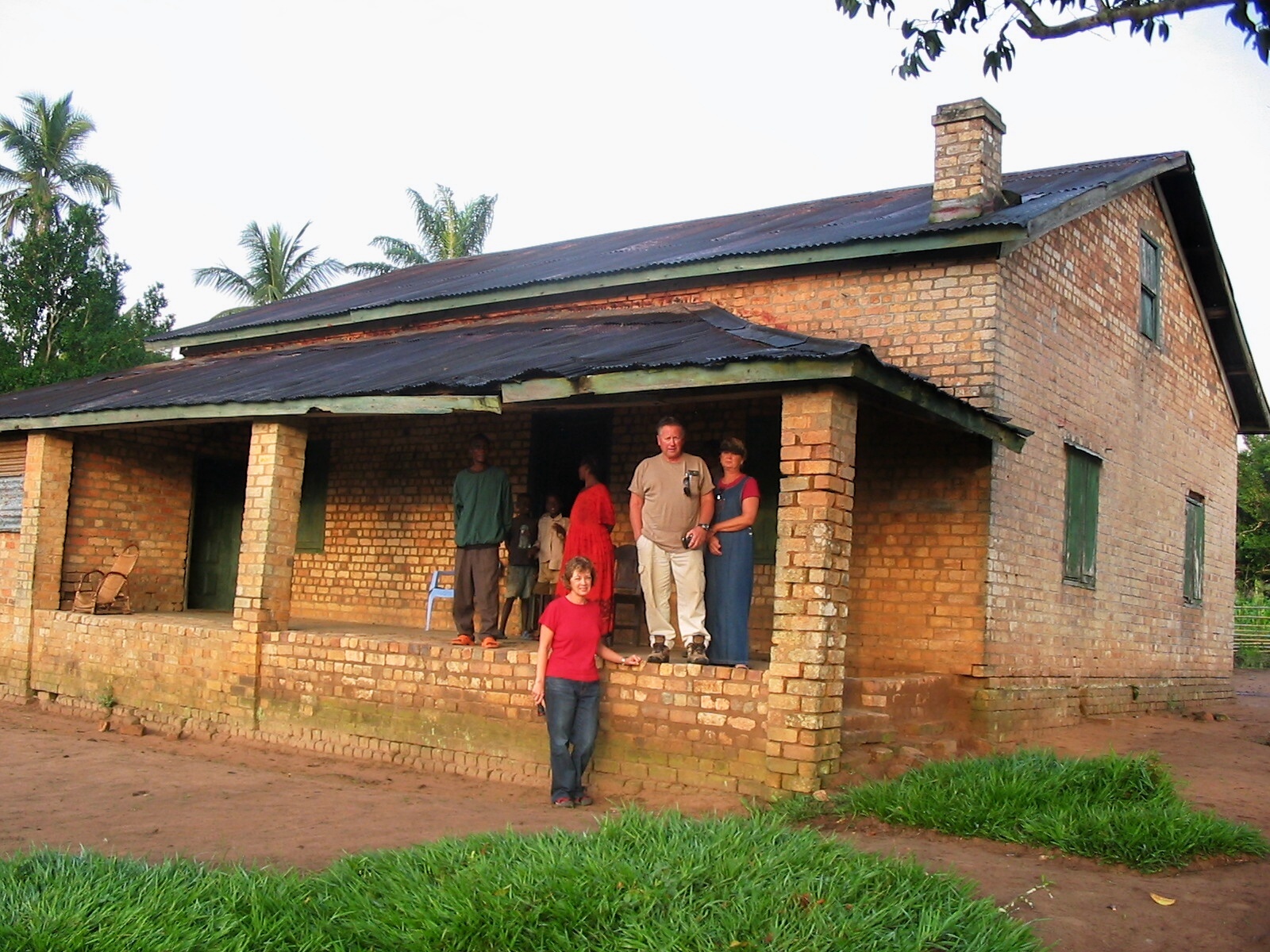
This week Stan describes what their home was like on the mission station when he was a child and then describes its condition when he and Brad returned to Congo in 2008.

“When we lived on the station, the homes were built of brick with cement floors. They had screen doors and windows. My mom had a garden and a hired Congolese gardener.

“The station had its own diesel-powered generator for electricity. We ran the generator at noon for an hour everyday. This was the designated time we used our radios to contact the other mission stations. (Stations where anywhere from twenty to one hundred miles apart in our province of South Central Kasai.) We kept in touch with each station through the noon radio. We also ran the generator in the evenings for light in our homes and of course the generator provided electricity for the hospital.

“One of the missionaries had hooked up old crank telephones at each of the six missionary houses on our station. These gave us a convenient way to communicate. Each home had their own ring (a combination of long and short rings) just like in the states years ago.

(Over the years I’ve heard of many ingenious missionaries like this man. They creatively made do with available resources. –note from SuZan)

“When we returned to Congo we found that the village pastor and his family live in our old home. This is good. We’re glad they’re making use of it. However, it’s sad that the roof leaks and the screens are all gone. The windows are boarded up so it’s always dark in the house. And of course they have no electricity because the generator is long gone.”

Family Home-Ndjoko Punda
The Graber family home at the Mission Station, Ndjoko Punda

Be sure to Follow us. Click on the orange Follow word. It will take you to sign-up with your email address. If you Follow us you’ll never miss a post.

©2015 Hope4Congo

Brad First Returned to Congo in 2007

IMG_20141025_153339282
Brad and his wife, Sharon

This week we hear from Brad. Brad what was the Congo like when you returned in 2007?

“Chaos!

“The Congolese were never trained to be leaders. Each tribe wanted to be in power. Tribal warfare broke out all over the country. There was no understanding of what it took to preserve the country’s infrastructure. None of the Congolese had experience or the education to maintain order. Nor did they have the understanding of economics, or politics, or how to keep up or repair mechanical services.

“When my wife and I landed at the Kinshasa airport, the runway was full of potholes. A junkyard filled with broken and rusted planes lined all sides of the airport strip. When we de-planed we couldn’t figure out where the main entrance was to the terminal. There were three doors. About a dozen Africans yelled at once. They all wanted us to do something different. They all wanted to be in charge. We chose the entrance were the majority of Africans entered the building.

“Inside, we wondered what all the noise was on the other side of the wall. We had to stand in line to go through the door. On the other side was pandemonium: a sea of people, all milling about, shouting at us, and demanding money. Ninety percent of the people were there to make a living by accosting people. They tried to grab suitcases. There were no signs telling us what to do. We could have been taken advantage of by all of these people. We had to fight our way through the crowd.

“Before we left for Africa our mother gave us this advice: If you get in a jam, try speaking Tshiluba and see what happens.

“I yelled above the din, ‘Does anyone here speak Tshiluba?’

“The people calmed down. Three or four people came forward who spoke that dialect. Eventually someone from the church arrived. They helped us navigate the chaos and the bribes. It was a relief to get into a taxi outside the airport.

“Everywhere we went we were shocked by the appearance of the city. The buildings were deteriorating. No one fixed anything, partly because they didn’t know how, partly because there was no money, and partly because there were no supplies or reserves to fix anything.

“Colonialism had its flaws, but after the country gained its independence the cultural instability and economic hardships increased.

“Previously, under Belgian rule, everything was orderly and maintained. There was a beauty to the order. Palm trees with painted white trunks lined the roads. Buildings were kept clean and painted.

“During the rainy season the roads washed out. The Belgians had a system in place to fix the roads. Each village was assigned a certain amount of road to maintain.

“The people ate much better. They had better access to fruit. They had crops. After the rebel movement, the Congolese allowed everything to self-destruct. The coffee and palm oil plantations, which were the main Congolese exports, were all gone. These plantations had provided jobs and money for the people.

“Now, no one wanted to work. They all chased the wind, looking for a quick buck through mining for diamonds or gold. Or living off bribes. The average Congolese person will do whatever it takes to survive.

“When Mubutu came to power, he raped the country through his dysfunctional leadership. He filled his coffers with the country’s bounty and left the country desolate.”

It’s heartbreaking, Brad. No wonder the Lord opened your heart and Stan’s to begin this ministry.

Please Follow us to keep us with the current ministry plans in Congo.

©2015 Hope4Congo

School and Pets

IMG_1775
Stan (Kanyinda) and Bonnie with two of their precious grandchildren

We continue our interview with Stan about his childhood in Congo. Kanyinda, what was school like?

“Another missionary who lived on our station home schooled us for our early grades. In fourth grade I went to the missionary children’s boarding school. It was a two-day trip by car to that school. That first year I was very lonely, missing my parents, but then I made friends. In addition to school we had a great deal of freedom, we went hiking, etc. Although we had school work to do and cared for our rooms. I guess I had so much fun in my daily life that I didn’t realize I was doing chores.”

Children reading this may become jealous of your childhood, Stan. What kind of pets did you have in Congo?

“We had several parrots, a squirrel and a few monkeys. The Congolese would often bring birds to sell us for pets. They still sell them for pets or for food. Even small birds are eaten. They use a very sticky sap that they spread on tree branches to catch the birds.

“When we were in Africa this last time someone wanted to sell me a young Civet Cat for a pet. It was kind of a cute little thing with the black and white rings on its tail and its long snout. But of course, I couldn’t bring it back to America with me.”

Next week Brad will tell us what it was like to return to Congo in 2007 after an absence of many years.

©2015 Hope4Congo

Foods of Childhood

Last week Stan, Kanyinda told us about moussa or bidia, a staple food in Congo. This week I’ve asked him to tell us about some of the other foods he ate as a child.

“The fruit was amazing: Mangoes, papaya, oranges, and pineapple. I also liked roasted palm nuts and fried plantain (this looks like a banana, but is more starchy like a potato).

“Our mother had a garden and employed a native gardener. We had fruit trees and vegetables. We also bought eggs, bananas and other produce from the Africans. We paid for these items wit Belgian francs and sometimes my folks traded ties for eggs.”

Excuse me? You traded what?

“We traded men’s ties and colorful scarves for eggs. The Africans like the bright colors and patterns of men’s ties. They like to dress up—wear suits and ties.

“They dress up for special occasions and for church. Teachers and preachers might dress up more because of their position. Office workers in the city also wear business suits and nice dresses. Usual sights to see in the city are workers carrying their shoes while they walk miles to work barefoot. They save their shoes to keep them nice.”

Next week Stan will tell us what school was like for him in Congo.

©2015 Hope4Congo

Sights & Smells of Congo

One way to make a place come alive in our imagination is to use our senses. I’ve asked Stan Graber (Kanyinda) to tell us about some of the sights and smells of Congo.

“I remember the smell of burning tree branches and charcoal–items used for open cooking fires. When we returned to Congo we could smell a village before we got there because of the smoke from those fires.
“There is also the smell of maniac flour cooking and the spicy food the Congolese like. They prefer to cook with hot peppers, tomatoes, and greens. They use palm oil made from palm nuts. The oil has a red color so the gravy is usually red, too. The greens look like cooked spinach.
“They serve this red gravy in a separate bowl from the Moussa or Vidia (pronounced Vedea, long e sounds). They ball up the moussa between their fingers and dip it in the gravy. They rarely have meat, but if they do they’ll use their fingers/thumbs to scoop it out of the sauce/gravy.
“They cook the moussa/vidia over their open fires. They hold the pot with their feet (ouch) while they slowly mix in the moussa flour with an eighteen-inch long paddle. They combine the flour with either corn meal or a flour made from millet. In our region they mainly used corn meal which I prefer to the millet.”

Thank you, Stan. I’ll add a few comments about my experience with moussa.

A kind of chicken gravy is sometimes served over the cooked maniac. Maniac is a poisonous root (has arsenic), but the Africans have found a way to make it safe to eat. They soak it for several days in river water. They dry it out on the river banks or on drying racks made of sticks and pound the dried roots into flour. After that it is mixed with water and cooked. In a way it has become their staple. They serve the spicy chicken broth or vegetable/palm oil gravy over the cooked maniac in the same way that we would serve gravy over mashed potatoes.

My husband’s aunt, Elda Hiebert was a missionary nurse/midwife in Congo. On her return she treated us to a traditional dinner. To me the prepared moussa looks rather gray and dense when it’s prepared. It is very filling. The missionaries and their children seem to love it as much as the natives. Maniac helps fill stomachs when there isn’t much else available, but it isn’t very nutritious. Please keep the Congolese in your prayers. It is a daily struggle for many to get enough food.

I look forward to meeting with you here next Tuesday.

©2015 Hope4Congo