Bamboo Bicycles, Part 2

Team Meeting
Team Meeting

Thank you for joining us as we again look at the Congo Transport to Market Bicycle Project Update. Chuck Regier and Craig Calfee traveled to Congo in July 2015. Last week we learned of their initial observations on the work. This week we continue with the following excerpts taken from their 2015 report. These excerpts have been edited for clarity on our website.

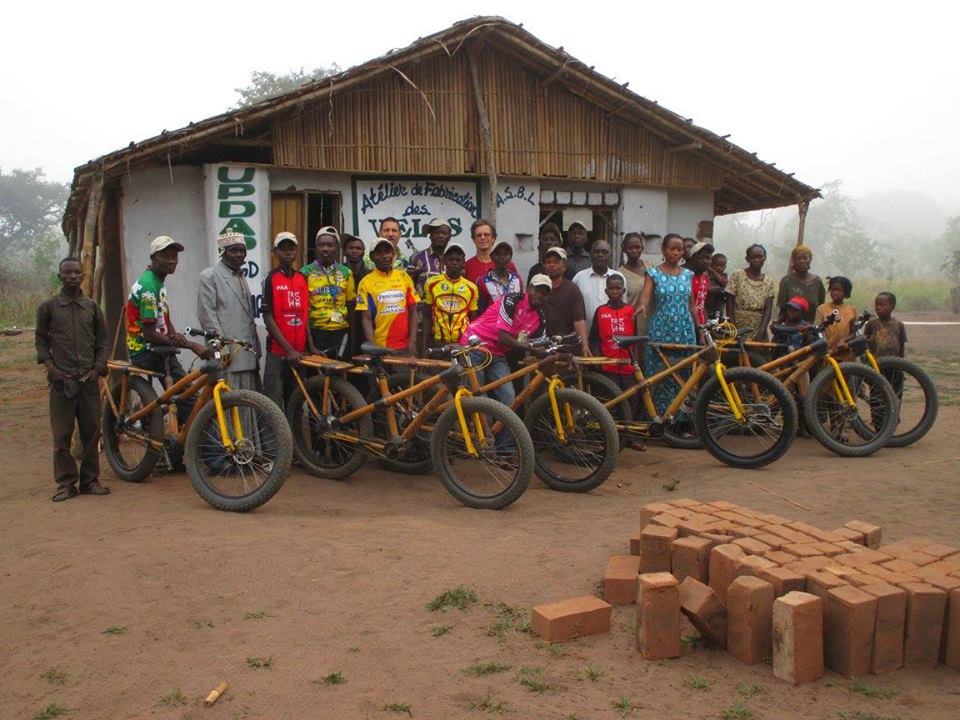
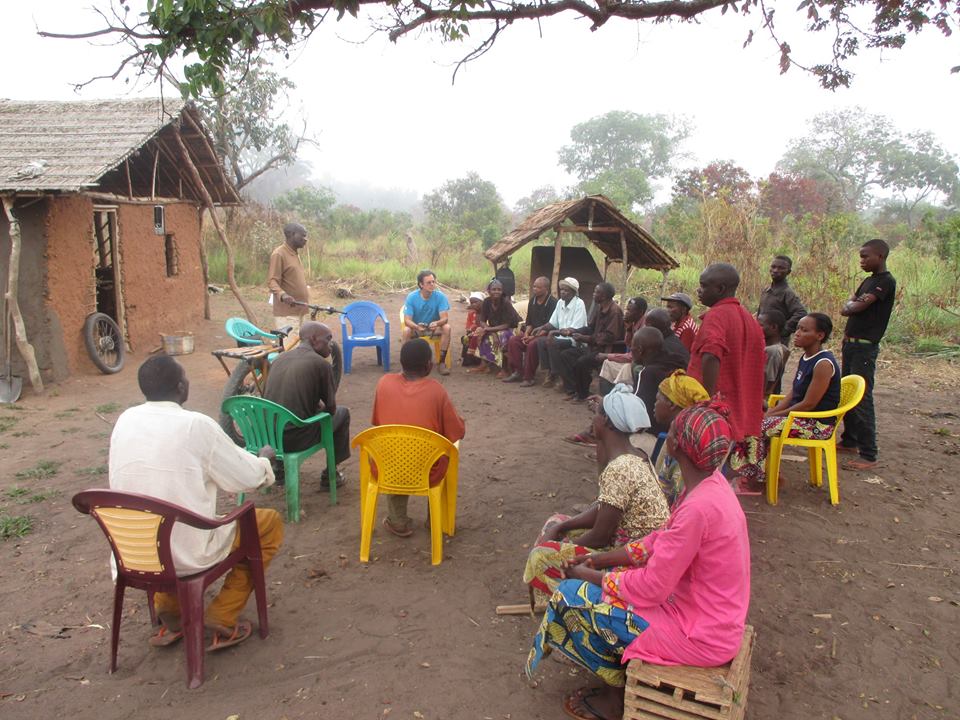
Chuck and Craig began their work with a team meeting (see photo above) to review the project since their visit in 2013. They discussed what worked (click here to see last week’s blog), what the problems were, and how the bikes could be improved.
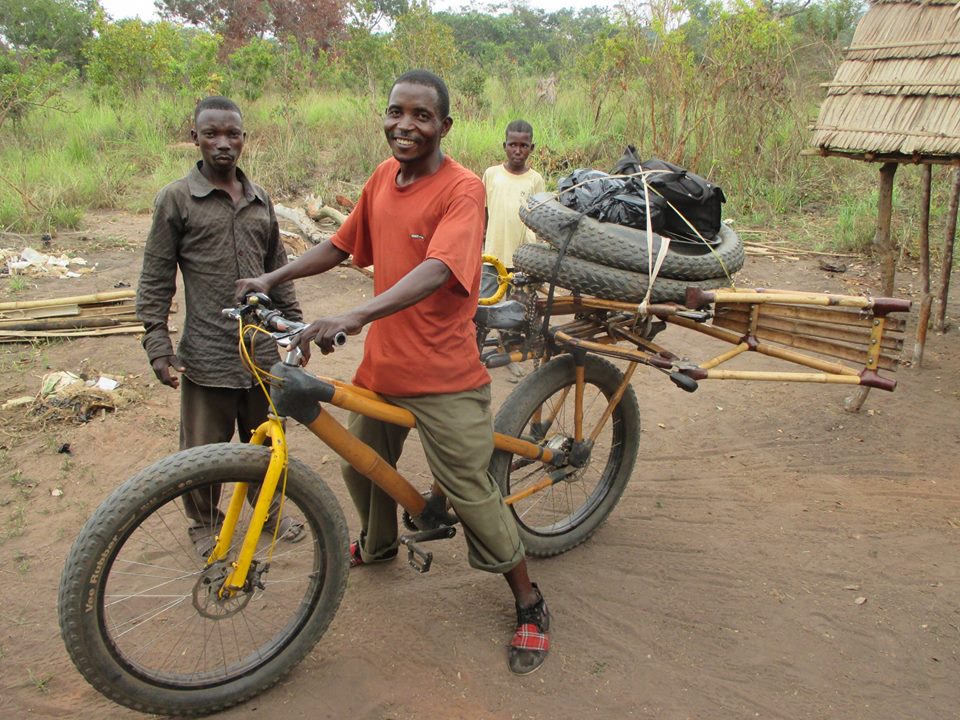
Damaged bike strapped to back being returned for repairs.

Main technical/hardware problems:
• Freewheels were not all functioning. Most bicycles being used in the village had the chains removed when pushing loads—freewheels it appears are not meant to be coasted continuously.
• Infinitely variable hub. Team appreciated having variable speeds, and the basic hub seems to hold up well. Work needed on a simplified more durable shifter to allow effective use of these hubs.
• Most of the brakes had worn out or were not working. We reviewed the process of how brakes should be installed. Brake pads are not expensive. There are lots of replacements in inventory so keeping brakes operational should be possible.

12227136_517770111725949_8632434784012247287_n
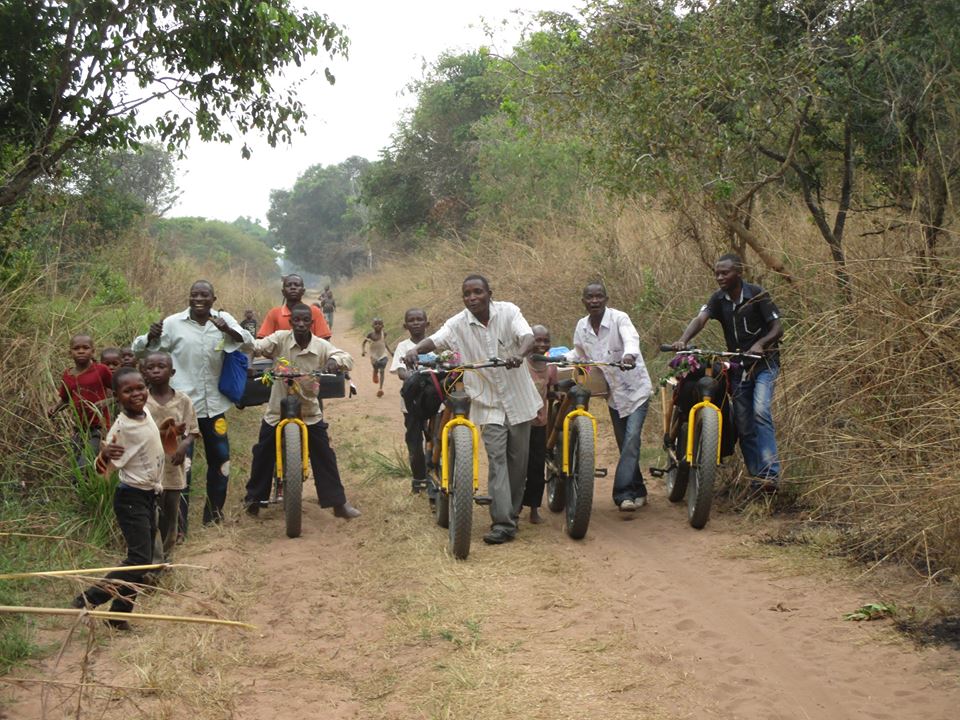
Although the men are examining a loose crank bearing, this photo illustrates the fat tires. Fat tires performed and held up well on the sandy Congo roads.
Inner tube-valve stems broke off-resolved by retrofitting stems of locally available tubes
Inner tube-valve stems broke off, resolved by retrofitting stems of locally available tubes


Other issues:
• Several of the frames showed signs of insect activity and three bicycles had broken chain stays. We repaired all of these frames. How the bamboo is cured and how to treat/protect existing frames both from insects and water will be reviewed.
• Some issues with headset, crank bearings and chain ring connection were observed. Assembly is different than the existing Chinese bicycles. It was confirmed that keeping the crank and headsets adjusted and replacing worn bushings is critical.
• Inventory and storage is a challenge. Small plastic bins were purchased in the market for parts storage and storage organization was discussed. Additional dividers and boxes for this purpose were made. An inventory was developed of all parts in stock, indicating how many bikes could be made with parts on hand, and which parts were short, and a list of the spare parts on hand.
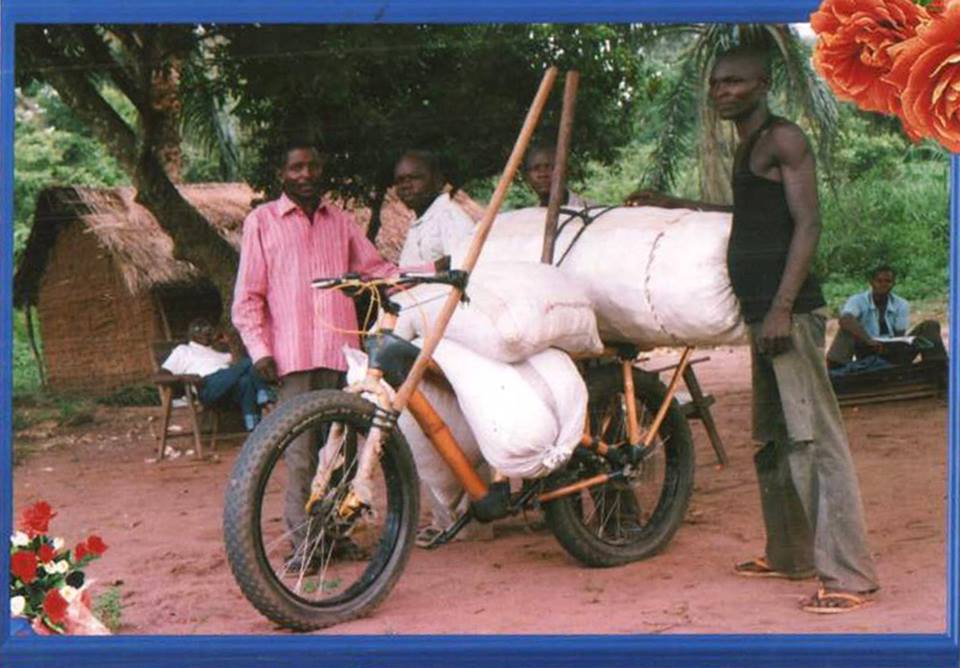
• The existing bamboo bicycles had really been tested to see if the local bamboo could make a true bicycle. People wanted to see how strong they were so they were loaded with up to 700 kilos. When the people understood their bikes and took care of them, they lasted longer.
• There is a market for these bamboo bicycles. People are impressed when they see them and the bikes always draw a crowd.
• Travel can be slow because of the questions and interest from people along the way.
• Team members complained because people want to take their bikes and ride them. Therefore the bicycles must be locked up.
• In addition to the local market around Khoma and UPDAP’s area of operation (UPDAP is the project’s Congolese partner), marketing to larger organizations with interest and capacity to invest for longer term benefits in their own larger country operations should be considered. One bicycle was purchased from the cooperative and taken to Kinshasa to be used to promote the concept and see if other individuals, organizations or businesses would be interested in using and/or producing these transport bicycles.

Join us next Thursday for Part 3 of this series.
©2016 Hope4Congo

Bamboo Bicycles, Part 1

Team in front of the new workshop, Khoma, DRC

We’ve written previously about the importance of bicycles to the Congolese people. Subsistence farm families use bicycles to transport items to market. For most rural people bicycles are the best way to deal with the poor road conditions in Congo. This gives them access to services, such as health care.

At Hope4Congo we are committed to keeping you informed about what other ministries are doing in Congo. The following excerpts are taken from the 2015 report on the Congo Transport to Market Bicycle Project. These excerpts have been edited for clarity on our website.

Project Goals
The bicycle project builds on lessons learned over the past five years of work.
• Supply their Congolese partner (UPDAP) with parts for up to 50 bamboo framed bicycles
• Provide training and instruction to establish quality production processes
• Develop a business model for small scale production in Congo

Project Leaders
Chuck Regier and Craig Calfee are the primary project leaders. They are supported by Harlan Bartel, John Schellenberg, Stan Graber, and Cliff Dick.

Report on the 2015 Congo Trip – Initial Observations
Chuck and Craig traveled to Congo in July 2015 to work at maintaining project momentum and direction. They arrived in Kinshasa and flew by MAF to Nyanga.

12234865_517769575059336_8476508910792774586_nAt Nyanga airport, four bamboo bicycles awaited the men to haul their luggage and supplies the seven kilometers to Khoma, DRC (Democratic Republic of Congo). This journey gave the men an introduction to the challenges of maintaining the bikes. It provided their first glimpse of the work ahead of them.

Upon arrival at Khoma, Chuck and Craig saw the nice workshop and new drying oven built by the team at Khoma. The workshop included a small office/reception area and a locked room for inventory supplies. The small oven for drying bamboo (built in 2013) had been replaced with a larger one, which included a good roof. It was pleasing to see this progress on the project.

On the negative side, it has been difficult to keep skilled craftsmen/frame builders on the team without regular work available.12227189_517772908392336_5724312494067694177_n

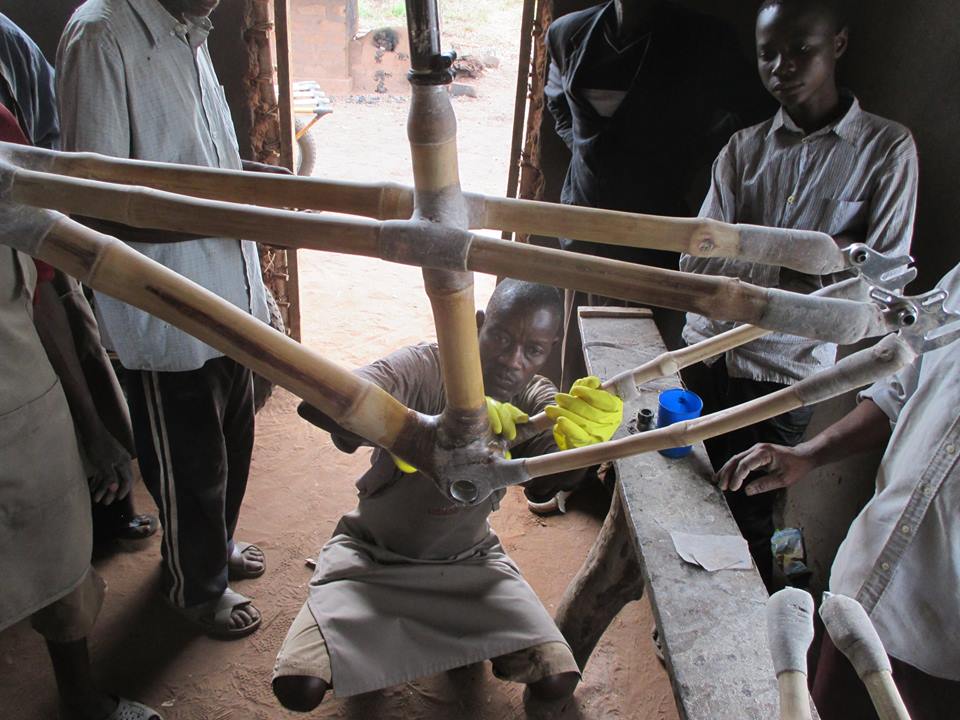
Reviewing frame assembly


Chuck and Craig began their work with a team meeting to review the project since their visit in 2013. They discussed what worked, what the problems were, and how the bikes could be improved.

Things that worked:
• Tires and wheels.
• Overall bicycle design pleased the team
• Ability to push larger loads more easily in the sand and rough roads
• Riding bicycles, they made better time than the standard Chinese models
• Even while carrying 50-100 lb payload they made better time
• Travel longer distances, the bikes have brought merchandise back from Angola
• Overall the frames held up well
• Seats were still in good condition

We will continue the 2015 report from the team meeting here on our blog next Thursday. Please join us.

©2016 Hope4Congo

Meet Robert Irundu

The following edited excerpts are taken from Charles Buller’s Congo Leadership Support Network December 2015 newsletter.

Robert Irundu is the youngest member of the coaching team. A passionate leader, he plays a significant role in the life of the Mennonite Community (CMCo) as pastor, community organizer, businessman, and youth president.

He and his wife, Esther, have seven children. They live in the heart of Kinshasa’s slums where he pastors a young congregation: New Covenant Mennonite Church.

Since 2011, Robert has also served as the youth leader for the CMCo community. He travels among some 800 congregations speaking to youth and organizing Bible camps.

In addition to his job as an insurance agent, he heads up the prayer ministry for the National Prayer Breakfast (counter part to the NPB in Washington, D.C.)

Regarding the Leadership Support Network, Robert said, “Our Network seeks to walk with CMCo pastors to achieve their personal goals and enable the church to move forward. The impact of this will be to raise the love quotient in the entire Mennonite community and increase the trust and support among leaders.”

Pray for Robert and the coaching team. As they manage their jobs and their ministries, they must also care for their marriage and family.

New Year Hopes for Congo Leadership Support Network

In an effort to keep you informed of what other ministries are doing in the Congo, we provide the following excerpts from Charles Buller’s newsletter sent December 2015. These items have been edited for clarity on our website:

With the new year comes the challenge of growing and stabilizing a support base to sustain this ministry into its next phase that will invariably involve more program costs and more trans-Atlantic trips.

Charles continues to be responsible for raising 100% of his support for the work, and takes very seriously the challenge of good stewardship regarding the assistance provided by his supporters–whether through prayers or finances.

Please consider continuing your support or even possibly upping it for 2016. Whether or not you can give, your prayers are an invaluable gift and Charles plans to keep his supporters informed in the year to come.

Send your financial gifts for Charles and the Congo Leadership Support Network, to: AIMM

***

We praise and thank God for the miraculous healing of Damien and Sylvie. You may remember that they were viciously attacked by thugs the weekend after Charles left Congo in September 2015.

Damien suffered a fractured skull from a machete blow. It cut through to his brain. Sylvie was also roughed up. All their belongings were stolen.

Because of the generous gifts and prayers of many, they have received excellent medical care and a quiet place to rest and recover.

Charles reported in December that Damien was able to join their team conference call for the first time since the attack. Thank you, God!

***

Charles continues to have frequent contact with the Congo coaching team and with the CMCo administration regarding a series of leadership seminars with coaching to follow. The team is now practicing what it plans to preach (peer coaching). They are concurrently translating remaining sections of Leadership Coaching by Tony Stoltzfus into French.

The goal is to create an extensive manual to guide the first round of seminars and two years of follow-up coaching.

Pray for a solid seminar launch!
Early this year (2016) they hope to offer the first of three seminars in each of the 11 provinces of the Communaute’ Mennonite au Congo. Requests have been received to that end.

Now comes the hard part of coordinating expectations, schedules, registrations, transportation, food and lodging as well as many other details.

In Congo, there is no simple one way to do this. The Network welcomes your prayers for grace and understanding as they find their way in this faith venture.

Here are specific prayer focuses:
*Good communication and understanding with CMCo Vice-President Birakara Joly. He will serve as a vital link in planning and coordinating with the provinces.
*Wisdom to pace and organize the seminars–the goal is to minimize costs and schedule with respect to team members’ other full-time jobs/ministries.
*Provision and support for pastoral leaders to cover their costs of transportation, food, and lodging.
*Spiritual expectation! Pray for an openness to what God is doing and to the changes this new work might entail.

Special Opportunity

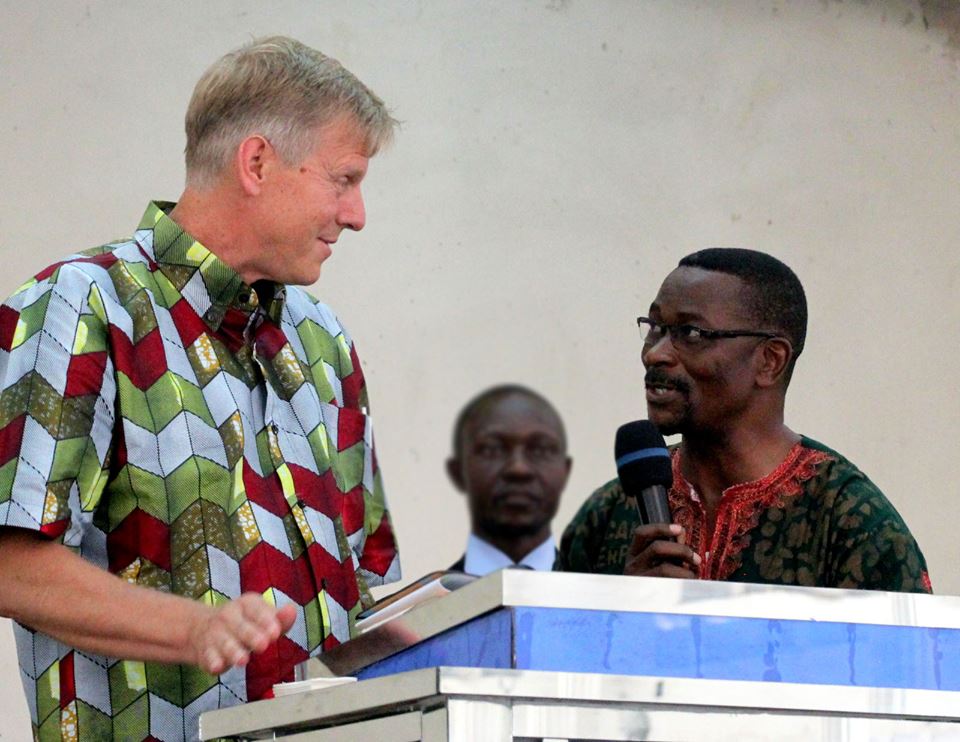
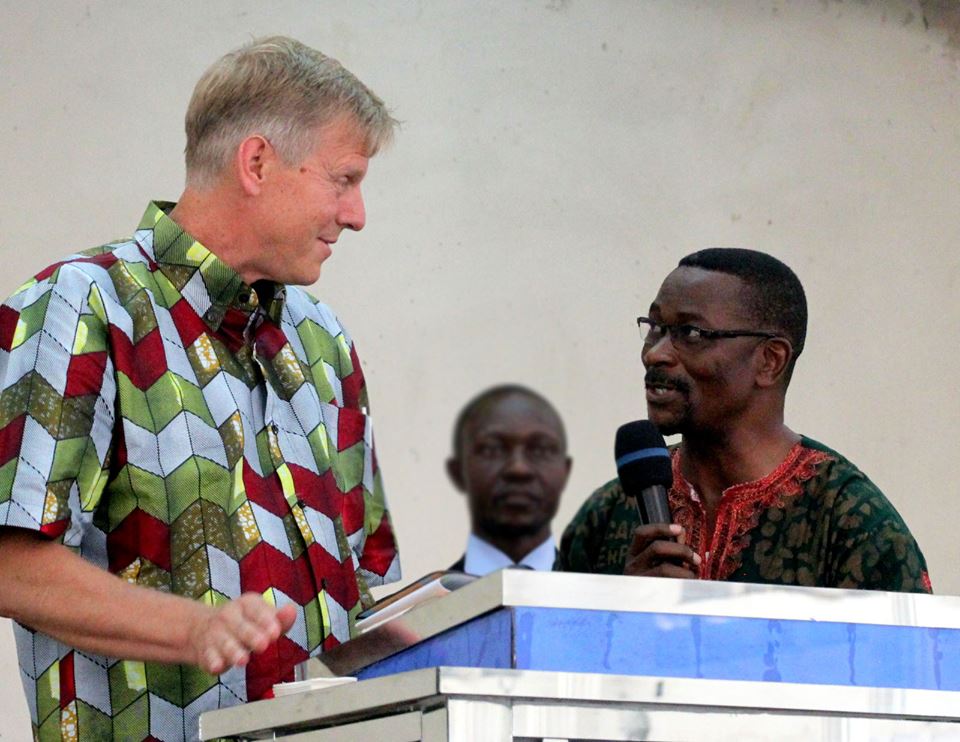
1622159_10153706826209473_1476683176539112150_nCharles Buller (left) of the Congo Leadership Support Network has invited Leonard Kiswangi (right), a partner in ministry from the Congo, to speak at Silverwood Mennonite Church, Goshen on Sunday, January 31st at 6:00 p.m.

Leonard has been instrumental in helping to get the Leadership Coaching Network off the ground.The Congo Leadership Support Network’s goal is to provide support to hundreds of pastors in the Congo who currently lack the ministry and marriage resources they need to be able to thrive for the long haul.

In order to travel, Leonard needed to obtain his travel visa. This is no small feat in Congo. Leonard described how God intervened.

Leonard was in the waiting room with many of the country’s dignitaries – some of whom were receiving visas and some who were not. When his name was called, the interviewer was only excited about what this trip would mean for Leonard and gave him the ‘green light’ without a hitch or a grilling. Leonard saw it as the clear favor of God.

Mr. Kiswangi’s English is easy to understand, and his style exceptionally personable and refreshing.  For those unable to join the meeting in person, go to www.ustream.tv, click ‘watch’ and type in “Charles & Leonard” in the search option. Or you can simply click here: www.ustream.tv/channel/d9b9cQt7YHx  If that fails to take you to the appropriate page then type the web address into your browser’s search bar at the time and date given.

© 2015 Hope4Congo

Changing the Narrative from Hopelessness to Hope

Written by Brad Graber

One of my favorite verses in the Bible is found in Revelation 7:9, “After this I saw a vast crowd too great to count, from every nation and tribe and people and language, standing in front of the throne and before the lamb”. This great crowd along with the angels were worshiping and glorifying God. Their faith and hope in things eternal have become a reality.

This picture is reflective of our missional God. Hope for Congo continues to be missional laying up treasures in heaven where things do not waste away and wear out. We want to participate in changing the narrative from hopelessness to hope.

The story is told of some men bringing a paralyzed man on a bed to Jesus. Because of the crowd they were not able to get to Jesus so they decided to take the man up on the roof and let him down on his bed through the tiles.

The paralyzed man’s friends were instrumental in changing the narrative for their friend from one of hopelessness to hope. Their hope in turn became a reality. The man was healed.

Realized hope always produces more than the specific event. This event was more than a physical healing. The crowd was amazed and awed. The man was healed and his sins were forgiven. Everyone went away glorifying God and saying, “We have seen amazing things today!”

Jesus saw their faith and responded. God is the source of all hope. Hebrews says that faith is the confidence that what we hope for will actually happen; it gives us assurance about things we cannot see.

If we are going to truly change the narrative in Congo we must look to God and trust Him with the narrative.

We cannot do it alone. Your continued interest, prayers and giving will allow us to continue our investment in:
• individual lives
• printing Bibles
• tools and resources

Thank you for all the ways you have helped Hope for Congo in changing the narrative, we look forward to what God wants to do in and through us collectively in 2016.

With your help Stan and I would like to continue investing in Congo and return for a needed visit in 2016 God willing. Please pray to that end and may we see amazing things to God’s glory.

©2015 Hope4Congo