Kanyinda’s Childhood

1533922_10202045943843785_2109652398_n
This photo is of the missionary evacuation in 1964. Most of the Graber family photos were lost at this time. If you have any photos of their family, this ministry would sincerely appreciate copies.


In today’s blog post, Stan (Kanyinda), continues the story of his childhood in Congo.

“Growing up in the Congo was idyllic for me. When I got up in the morning, it seemed the world was my playground. My siblings and I, as well as village children rode our wagon down the hill from our home. When I was a child that hill seemed a long way from home. I felt like I had such freedom.

“Our entire lives seemed carefree. We ran to the forest and played.

“Three to five missionary families lived on the station at any one time. Each family had their own home. There was also a print shop for printing Bibles, hymnbooks, and other literature in the native languages. A hospital was on the station, too.

“Well-maintained paths and roads ran between the various buildings on the station. This allowed access for commercial vehicles as well as the missionary vehicles. Those paths and roads also provided fine places for me to ride Yambu’s bike, which I did regularly.”

We’ll continue Kanyinda’s story next week. Meanwhile, if you haven’t already done so, please check out Bibles & Literature on the Projects page. Also, please read the recent blog post, Bibles for Congo Update.

Be sure to leave a comment below. Please let us know if you have any photographs of their family taken before the evacuation. Don’t forget to Follow us, too.

©2015 Hope4Congo
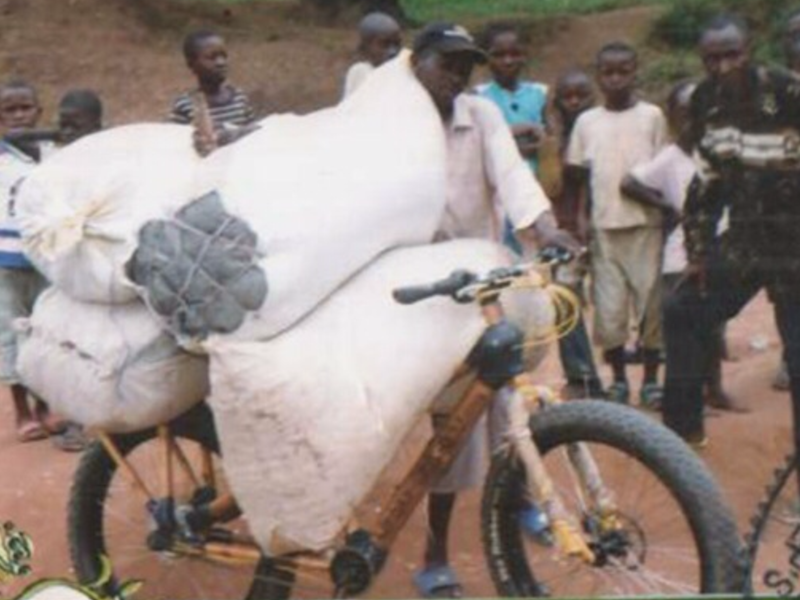
A Bicycle in Congo

H4C_Loaded_Bicycle
Bicycles are very important for transportation in Congo


Stan is the oldest of the two brothers. I’ve asked Stan to describe his first childhood memory of Congo.

“The first memory that comes to mind is learning to ride a bicycle. It was commonplace for the Missionaries to hire natives to stand watch and guard the mission homes. This gave the Congolese pay that they could count on, a sense of pride in their responsibility, and an opportunity to observe these Christians up close.

“The missionaries also hired cooks and gardeners. Thus freed from these tasks, the missionaries could concentrate on the reasons God had sent them to Africa: to teach the people about Jesus. They came as translators, as doctors, as nurses, as preachers, and teachers. Many of the native languages had never been translated into written words. By turning these spoken languages into written languages, the missionaries gave the people an opportunity to read God’s Word for themselves in their heart language.

“The Congolese are very generous people: An example of that generosity was a young man named Yambu.

“Yambu, was hired to be a sentry by my parents. Yambu owned a bicycle. He taught me how to ride. We became such good friends that Yambu told me, ‘What’s mine is yours. You may ride my bicycle any time you wish.’

“In Congo bicycles are considered valuable assets. They not only provide transportation, but they are lifeline—a means of getting food to the market for sale or trade.

“Yambu was sharing his most prized possession. This was a precious recognition of friendship. My name became Kanyinda.”

Loosely translated, Kanyinda means that Stan is a friend.

Be sure to check out the Project Page. Listed under Community Projects/Micro-Business is a photo and description of a current Hope 4 Congo project developing Cargo Bikes for the Congolese.

Leave a Reply Below and be sure to Follow us.

©2015 Hope4Congo

Sports Camp Evangelism

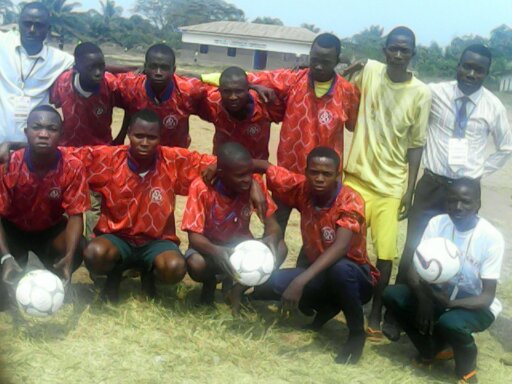
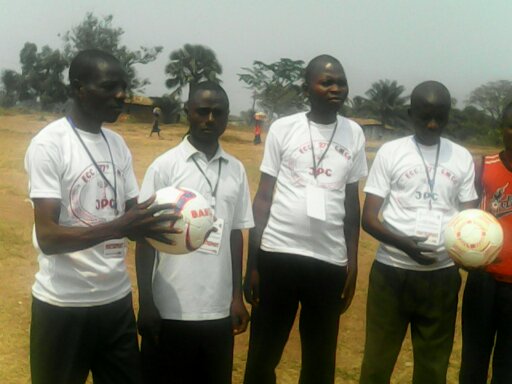
Co (1)Bible Camp 2014 TshikapaToday’s guest post is by Dwight Short.

“When I offered to be part of the contingent celebrating 100 years of ministry in Congo, my goal was to interview as many people as possible who had known my aunt, Lodema Short. I also offered to Rod Janzen, Exec. Dir. AIMM, my past experience with sports ministry through FCA and thought we might organize something for young people. We were told yes to this initiative at first and later on we were told it would not be possible. I accepted that answer while in Kinshasa trying to make weight with all my luggage and left all of my personal sport equipment behind, and shipped the bags of sports equipment via another air freight service. When we arrived in Tshikapa, I barely sat down when a young man named Robert Irundu introduced himself to me and told me he was excited about doing a soccer clinic! So, right away I am sure God is working things out that we were not able to as mere humans.

“I believe sports is the greatest tool for youth evangelism that is available to us. Because of this soccer clinic that we did on the spur of the moment in 2012, Robert has diligently planned and organized sports and Bible camps in several areas of the DRC. He wants to do many more and has built a great rapport with other pastors to make certain when kids give their lives to Christ, they will have a place to go and grow in the Lord. We had 400 kids show up for the camp in Tshikapa, and the potential to touch thousands of kids is only being limited by the resources we can provide to train and send more coaches and pastors out to share the Gospel thru sports.”

You can read more of this story via the website: http://www.mennonitemission.net/Stories/News/Pages/BiblesoccercamptrainsyouthinCongo.aspx

To support Sports Camp Evangelism Make your checks payable to: AIMM or Africa Inter-Mennonite Mission. Designate your donation to: Hope 4 Congo and indicate that you want your donation to be given to the Sports Camp Evangelism project. Click on this link, AIMM for further information and AIMM’s address. Thank you in advance for your support of this tremendous project.

Be sure to Follow us so you’ll get an email notification whenever Hope 4 Congo has a new post.

©2015 Hope4Congo


Baditu Grows Up

IMG_20141025_153339282
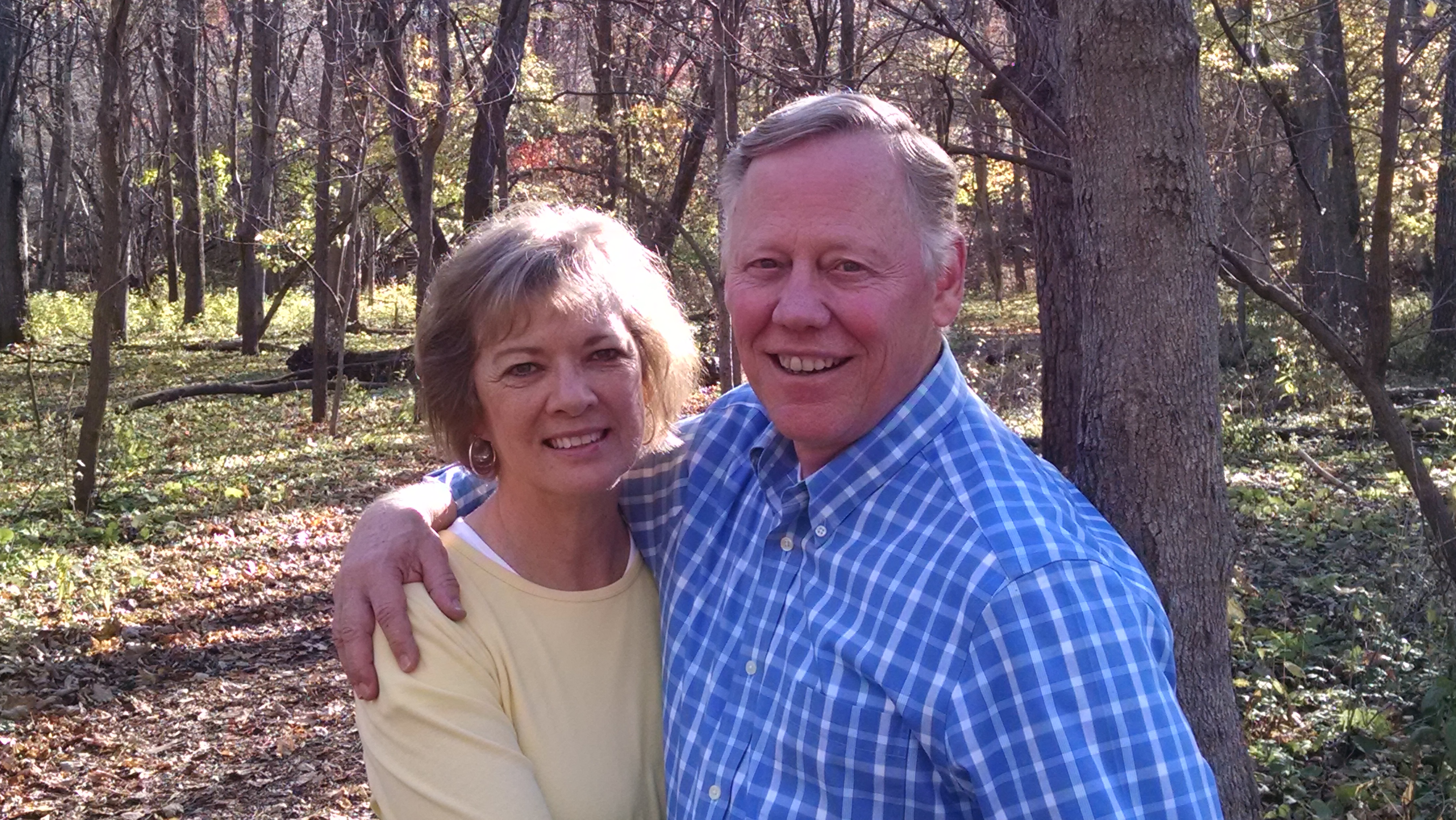
Brad “Baditu” and Sharon Graber

Our interview continues with Brad.
What was it like growing up in the Congo?

“Like the Adventures of Tom Sawyer and Huck Finn. It was the perfect place to run and play. We were safe because everyone looked out for us. My African name was Baditu. It means: of the forest.

“Our dad was an avid hunter. He brought deer, antelope, guinea or nquadi fowl (similar to prairie chicken or pheasant). We ate well.

“We also ate bidia made from the maniac root and a green plant similar to spinach. We had eels or chicken, too. A favorite Congolese dish was a fried meal called, mikata. It was made with greens and plantains.

“For pets we had baby crocodiles and a bright-colored talking parrot. Stan had a pet monkey. He’ll have to tell you what happened to it.

“There was always a sense of adventure. Our location was heavily forested. We walked the forest paths through trees, grass, and bamboo. We had picnics on the white beach sandbar beside the crocodile infested waters. We always had a fire to keep the crocs away.”

CROCODILES?

“Yes. A South African crocodile hunter came to hunt along the Kasai River about one mile from our mission station. Like any younger brother, I always wanted to do what my older brother did. Stan got to go with Dad to the hunt. I didn’t.”

Sounds like a story for another day.

Check back with us next week. We’ll begin our interview with Stan. Maybe we’ll get to the bottom of this crocodile hunter story.

Leave your comments below. Be sure to follow us so you’ll receive email notifications when our next post is available.

©2015 Hope4Congo

What is it about the Congo?

Most fascinating to me is what led the Graber brothers to return to the Congo and establish a ministry to the Congolese people. Today’s post is taken from my interview with Brad. It certainly reflects his heart. After you read it tell us what you think in the comments section at the bottom of the post.

“In 1964 we were forced to leave our home in the Congo. The rebels who were seeking power in opposition to the native African government (the Congolese had obtained independence by then) took over and anarchy reigned. We were rescued by the U.N. and eventually returned to America.

“America was a shock to me. I turned thirteen that fall.

“Always I carried with me my memories of home in the Congo. I had a vision or a dream of one day returning. I longed to return to Africa. To sit around the fire at night with the Congolese, to hear the stories, to be where I belonged with my friends. I shared experiences with them. I identified with them.

“The thought never left me of sitting around the fire at night with them. I think God gave me this dream to draw me back to the Congo. Although all of us identified with our parents calling to the mission field, I never felt called to be a missionary.

“But the desire to re-connect with the Congolese never left me. In 2007, my older brother, Stan and I, together with our wives, made the trip. Our plan was to show our wives where we grew up. However, the Lord had another plan. He used that trip to create the vision of Hope 4 Congo.

“Proverbs 16:9 In his heart a man plans his course, but the Lord determines his steps. (NIV). God gave the dream. Although I wasn’t called back to be a missionary, I was called to be a facilitator or conduit for what God wished to do there at our former home.

“Our mission home was on the North side of the Kasai River. Originally the site was only a small fishing village. In 1911 the local chief, Ndjoko Punda, offered the ground for the mission station. He designated that there was to be No bloodshed on that ground. Through that chief the mission station which bears his name was set apart for God’s purposes.”

©2015 Hope4Congo

Bibles for Congo Update

The following information is from a report
written by Rod Janzen, Exec. Dir. of AIMM

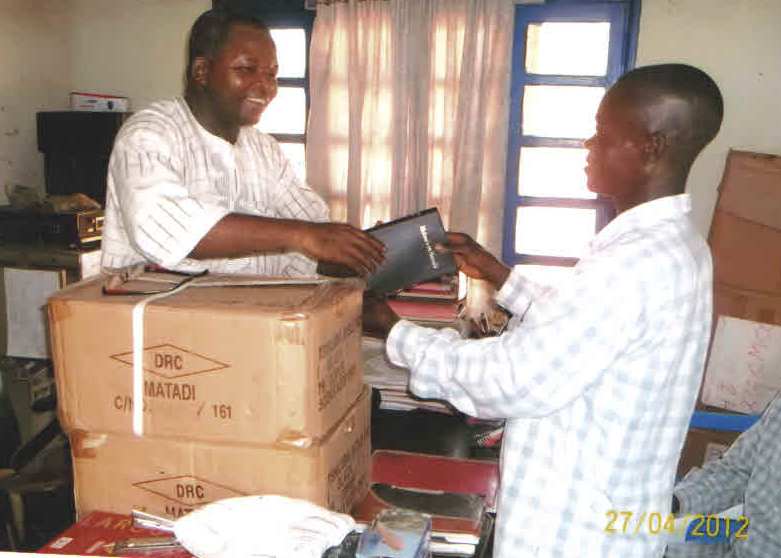
Hope 4 Congo seeks to supply Congolese language Bibles at affordable prices to congregational leaders   hfc bible sale 3and ordinary church members who attend Mennonite and other churches in the Democratic Republic of Congo.

The Need

In Congo, there are many local language Bible translations. Because of the large number, the Congo Bible Society does not have funds to automatically reprint each translation when a printing is sold out. Right now, a minimum printing is 3,000 Bibles, at $9 per Bible, for a total cost of $27,000. Congolese churches do not have the means to raise these funds themselves in order to supply their pastors and members with Bibles.

This means that many church members and even pastors are without a Bible, especially in rural areas.

Ps. Birakara sells Tshiluba BibleThe Solution

Hope 4 Congo is raising funds in order to reprint Bibles in the Kituba (Kikongo), Chokwe and Kipende languages, and to supply Tshiluba Bibles. These are four of the major languages of Mennonite church areas in Congo. The Bibles are printed and purchased at $9 per Bible, and sold to church members at $3 per Bible, making them more accessible to those who are struggling financially.

Bibles Already Supplied

  • Tshiluba Bibles: 2,800 have been purchased and sold at reduced prices in Tshikapa, Mbuji Mayi, Ndjoko Punda and elsewhere. Now, many more Tshiluba-speaking church members have access to the Word of God.
  • Kituba Bibles: 3,000 have been reprinted, and sold at reduced prices in and to the south of Kikwit.

Other Actions

  • Chokwe Bible: funds have been raised for a 3,000 copy reprint of this Bible. Once the Congo Bible Society verifies that the Chokwe translation is print-ready, funds will be sent and these Bibles will be printed, distributed and sold at reduced price in the Chokwe speaking area around Kamayala.
  •  Kipende Bible: it has been determined that this Bible needs to be revised before a reprinting. To prepare for the revision, the Bible has been scanned to create revisable computer files. A laptop computer has been purchased with this revision in mind. Currently a Congolese team is being recruited to do the revision.

You can help!
Send your contribution to:
AIMM, P.O. Box 744, Goshen, IN. 46527.
Indicate clearly that you are giving to Bibles for Congo.

©2015 Hope4Congo